Story
Persona 5, and the All-Consuming Power of a Great RPG
Is one Persona every ten years enough?
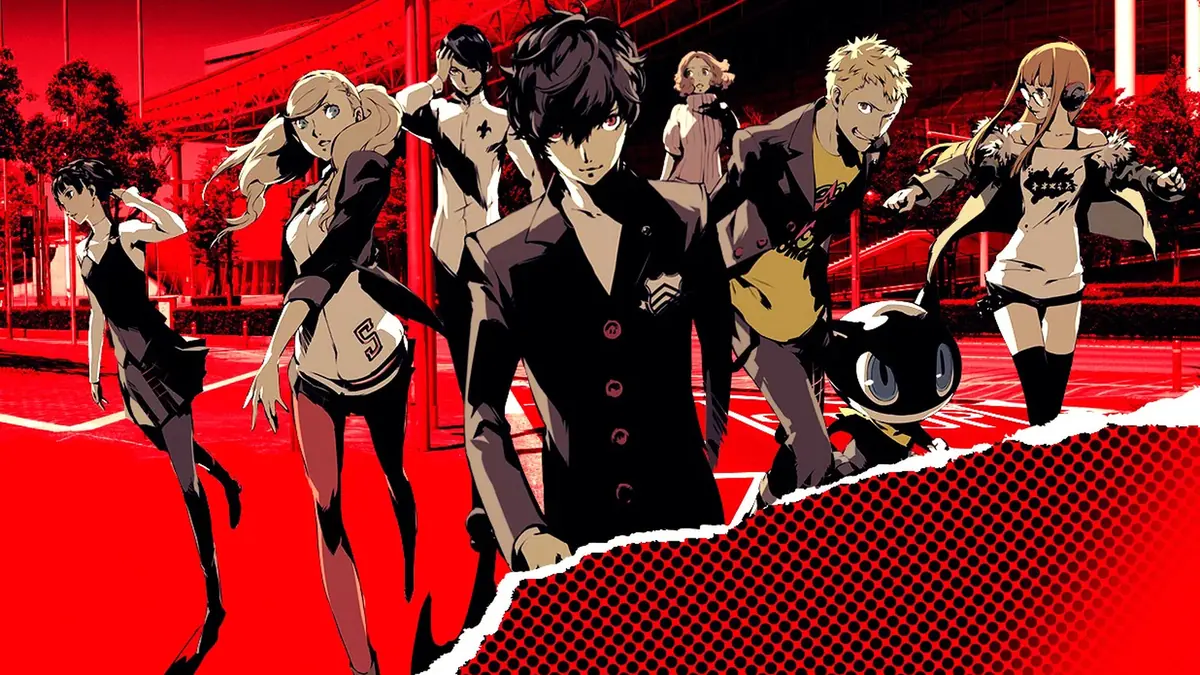
Persona 5 was my first real contact with the world of MegaTen, and I’m fairly sure I wasn’t alone in that.
The game launched in Japan in 2016 and arrived in the West in 2017, and it feels almost absurd that, nearly ten years later, we’re still waiting for concrete information on Persona 6.
I caught up with Persona 5 in 2017, a few months after its Western release. Around that same time, another masterpiece had arrived: NieR: Automata. That, too, was a series I had never touched before. I hadn’t played Drakengard, nor the first NieR.
Critics were raving about both. And yes, I bought them both within a few months of each other.
Two enormous games. Two gateways into worlds that, until then, had been completely outside my field of vision.
The right word is “absorbing”
If I had to choose one word to define Persona 5, it would be this: absorbing.
And I don’t just mean that the game throws a thousand features, options, customisation systems and things to do at you. It does, of course. Persona 5 is packed with systems, activities, dungeons, dialogue, time management, combat, social links and daily life.
But when I say “absorbing”, I mean something more emotional.
Persona 5 builds an unusually strong connection with the player. It does that through a story that works as a broad narrative framework, one that always manages to keep you hooked. But above all, it does it through dozens of smaller stories: personal, often dramatic, often painful, sometimes light, sometimes desperate.
And then there are the characters.
Even calling them “characters” starts to feel reductive after a while. Eventually, they become your group of friends. People you grow attached to, even if you’re not always sold on certain characterisation quirks typical of Japanese media.
It is absorbing in its style, its colours, its menus, its soundtrack, its rhythm.
It looks good. It sounds good. It is outrageously stylish.
Persona 5 is, simply put, cool. But cool in a rare way: not because it’s trying to look cool, but because every single element seems to be pushing in the same direction.
Combat, demons and student life
Persona 5 is absorbing in its combat system, too.
The demonic roster, weakness management, Persona fusion, the pace of battles, school life alternating with dungeons, constant conversations, the building of relationships: everything locks into a very precise structure.
At times, Persona 5 almost brushes up against visual novel territory. You talk a lot, live a lot, read a lot. But it is never just text. It is routine, atmosphere, emotional accumulation.
You go to school, you study, you work, you hang out with friends, you enter Palaces, you fight, then you return to everyday life. That alternation is where the spell is cast.
You are not just “playing through a story”. You are inhabiting a period in these characters’ lives.
After Persona 5, my second major encounter with the MegaTen world was Shin Megami Tensei.
There, I found something different. Less warm, less social, less narratively welcoming, but with a combat system that, for me, is even more refined and cleaner than Persona’s.
Shin Megami Tensei is incredibly compelling in a different way.
Less group of friends, more metaphysical survival.
Less student life, more war between gods, demons and ideas.
And I loved it to bits.
But then something starts to change
As I was saying: it has been almost ten years since Persona 5.
In the meantime, I picked up Persona 3 Reload, often remembered as one of the best entries in the series. And maybe that’s where the spell began to crack, just a little.
I’m enjoying Persona 3 Reload. I like the combat system, the story, the characters, the atmosphere. But I’m moving through it very slowly.
And I think that’s the reason: the Persona formula is incredibly powerful, but it is also very recognisable.
Persona 5, which I still recommend to everyone without hesitation, hits so hard because so much of it feels like you are doing it for the first time.
The first Palace.
The first days at school.
The first time managing social links.
The first fusions.
The first contact with demons.
The first time you realise how that structure can hold together daily life, dungeon crawling, combat, friendships, music, style and storytelling.
It is a wonderful machine. Beautiful. Almost perfect.
But that is exactly why its strongest impact comes the first time you see it working.
The problem isn’t the formula. It’s saturation
To be clear: I’m not saying every game needs to reinvent the wheel.
Some formulas work because they are solid, recognisable and well built.
The point is something else.
The absorbing nature of Persona 5 is devastatingly effective when you come to that kind of experience completely fresh. But when your library, and especially your mental space as a player, starts filling up with Persona-likes or structurally similar Atlus games, something changes.
Not because the game suddenly becomes bad.
Because it demands space.
Persona is not a game you “boot up for half an hour”. Persona wants time, attention, emotional availability. It wants you to slip into its rhythm. It wants you to accept its routine.
In my case, Persona 3 Reload arrived not too long after Metaphor: ReFantazio. And maybe that’s where a certain fatigue started to set in.
Not fatigue with the quality.
More fatigue with the architecture.
Persona 5 is still a special experience
So what am I trying to say?
If you have never played a Persona before, Persona 5 will probably sweep you away. You’ll fall for that enveloping architecture, for its ability to turn systems, dialogue, combat and everyday routine into one big emotional experience.
If you already know Persona but somehow missed 5, then it’s a slightly different story: it may not be your first encounter with the formula, but it remains one of the strongest, most complete and most memorable entries in the series.
And maybe, in the end, getting a new Persona every ten years isn’t such a bad idea.
Because time washes away almost everything.
It washes away saturation, familiarity, fatigue. And perhaps, after enough years, even an architecture you already know can feel fresh again.
In the meantime, one thing remains certain.
Long live the Phantom Thieves. And if you’re not part of the crew yet, now is the right time to join.