Story
Chrono Cross Wasn't Always Divisive. Our Tastes Changed
Time has a way of reminding us that our tastes evolve, and so do our expectations. What once felt acceptable, even wonderful, can now feel like stepping into an imperfect time capsule.

A recent Square Enix survey saw fans calling loudly for a remake, or at least a remaster, of Chrono Trigger.
Chrono Trigger is one of those games that has been left in a strange kind of limbo: adored by the most dedicated players, still regularly cited as one of the greatest JRPGs ever made, yet largely absent from Square Enix’s modern commercial plans.
Beyond the question of whether Chrono Trigger needs a new visual treatment, there is also a basic availability problem. Unlike Final Fantasy VII or VIII, it simply is not easy to access on current hardware.
Today, Chrono Trigger is available on mobile and Steam, but not on current-generation consoles, or even the previous generation, if we want to be strict about it. What has been widely available for a few years, however, is its sequel, in the form of Chrono Cross: The Radical Dreamers Edition. And that is the game I want to talk about today.
This is not meant to be a review. It is not going to be a tidy list of pros and cons, either. Think of it more as a loose reflection on a few aspects of the game that, to me, have not been central enough to the conversation around it.
Was Chrono Cross really divisive?
Chrono Cross: The Radical Dreamers Edition came out in 2022. Reviews were not especially glowing, but many of them had one thing in common: they framed Chrono Cross as the “divisive sequel” to Chrono Trigger.
And I found myself wondering: was it really?
Because I did not remember that level of division when the game first released in 1999. So I went back and looked at the criticism from the time and, yes, my memory was not playing tricks on me. Chrono Cross was received extremely well by the press. Even today, the original PlayStation version sits at a very handsome 94/100 on Metacritic.
In other words, at launch, this was not broadly treated as a problem child. It was treated as a gem.
So what happened?
A game that has not aged gracefully, but not entirely through fault of its own
It is hard to deny that Chrono Cross has aged poorly in some respects.
Part of that comes down to structural issues common to early 3D games. The hard break between exploration and battle, for instance, feels much heavier when compared with Chrono Trigger’s wonderfully seamless approach. More broadly, Chrono Cross carries all the awkwardness of an immature 3D era arriving just after 2D had reached something close to perfection, as explored in our piece on that very transition.
From that point of view, Chrono Trigger is far more readable, immediate and clean.
That said, when people describe Chrono Cross as divisive today, they are usually not talking only about its gameplay or its technical structure. The other big culprit is its storytelling.
And this is where, to me, the discussion becomes interesting.
The problem was not the story. It was the way audiences changed
In its own time, Chrono Cross was not seen as divisive because of its plot. Quite the opposite: what it tried to tell was considered one of its strengths.
Perhaps less so the way it told it, and we will come back to that, but the narrative material itself was seen as fascinating, ambitious, even grand.
Chrono Trigger’s story, after all, is not especially complicated. It is a sweeping time-travel adventure built with almost fairy-tale clarity. Chrono Cross takes that universe and turns it into something much more intricate, filtered through cosmological, metaphysical, technological and evolutionary themes.
Without getting into spoilers, imagine Chrono Trigger as Little Red Riding Hood.
A girl has to visit her grandmother. There is a wolf. The wolf has eaten the grandmother. The grandmother is in danger. The grandmother is saved. The end.
Chrono Cross comes along and says that maybe the girl’s actions had unforeseen consequences. That saving the grandmother meant the death of the wolf. That the forest was never quite what we thought it was. That perhaps everything had already been calculated. That behind that simple fairy tale there was a much larger, darker and far less comforting structure.
You see where I am going with this.
The narrative aesthetic of the late ’90s
The biggest Chrono Trigger fans had already anticipated a certain appetite for this kind of narrative fetish: taking simple stories and making them complicated, cryptic, layered and full of interpretive possibilities.
These were the years when fanfiction exploded. These were the years when, specifically around Chrono Trigger, fans began speculating and obsessing over what had happened to a certain character I will not name for spoiler reasons.
All of this fed into a narrative aesthetic that was very common between the late ’90s and early 2000s.
In games, there was Xenogears. In anime, there was Evangelion. A few years later, television would get Lost.
It was a period in which complexity was often treated as depth. Mystery, symbolism and narrative superstructure became almost a dominant language. Chrono Cross was born inside that cultural climate.
Today, that style of storytelling probably has less of a hold on audiences.
Now, we tend to prefer narrative construction that feels more elegant, more controlled, perhaps even simpler. Not necessarily less deep, but less baroque. Less interested in complicating everything until the story nearly collapses under the weight of its own ambitions.
That is why I feel strongly that Chrono Cross was not always divisive. It became divisive partly because our taste in stories changed.
And I understand that completely. Today, it can seem absurd to take a relatively straightforward story like Chrono Trigger and turn it inside out into a cosmological kaleidoscope. In some ways, it really is absurd.
Chrono Cross tells a fascinating story, but not in the best way
Staying with the plot, there is another issue: not just what Chrono Cross tells, but how it tells it.
We can dance around it as much as we like. I know perfectly well that many of the choices made by Masato Kato’s team were intentional. Some may be off-putting, but they were clearly deliberate.
Even so, one point is hard to ignore: Chrono Cross tells its story badly.
The problem is not simply that it is complex. The problem is that an enormous part of the plot is literally explained through a long conversation around three quarters of the way through the game. It is an infodump: a huge narrative block that is supposed to reorganise the meaning of the entire experience.
Was that also part of the late-’90s narrative aesthetic? Maybe.
More likely, though, audiences at the time were simply more willing to forgive those choices when a work felt vast, ambitious and almost monumental.
Today, we know complex stories with multiple layers of understanding can be told much better. They can preserve mystery while still building meaning. They can speak to the lives of their characters and to the great machine moving behind them. They can let the plot unfold gradually, like a beautiful mechanism opening piece by piece.
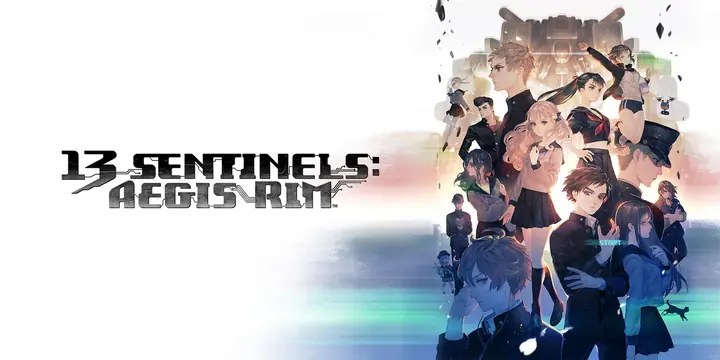
13 Sentinels: Aegis Rim, that strange hybrid of side-scrolling adventure, real-time strategy and visual novel, is a perfect example.
13 Sentinels proves that you can still tell a story full of layers, intersections, time jumps and multiple perspectives. And you can do it well.
Chrono Cross, by contrast, feels like a storyboard written on a blackboard. A beautiful storyboard, perhaps, but one that struggled when it had to become a coherent story.
Pacing is one of Chrono Cross’s real problems
There are other elements that are difficult to overlook.
Pacing is one of Chrono Cross’s most obvious flaws, and it affects almost every phase of the adventure.
It is remarkable how some story beats, especially early on, are pushed forward by questionable MacGuffins and narrative excuses that often make very little sense.
At times, the game seems unsure how to move you toward the next event. It shifts you from one area to another, introduces new characters, throws evocative ideas at you, but does not always manage to build a genuinely satisfying sense of progression.
Chrono Cross has ideas. So many ideas. Maybe too many. What it often lacks is the rhythm needed to let them breathe.
Kid and Serge do not get the space they deserve
A small Chrono Cross spoiler follows. Nothing you will not see in the first few hours, but if you have never played it and want to go in completely clean, you may want to stop here. Or keep reading, because it is nothing too earth-shattering.
There is one thing in Chrono Cross that I absolutely loved. Actually, two things: Kid and Serge.
I liked them both immediately.
Kid is fantastic: rebellious, impulsive, sarcastic, full of energy. She is one of those characters who instantly gives personality to the world around her.
Serge, meanwhile, is the classic silent protagonist, but his design works beautifully: a simple, elegant island boy, suspended somewhere between adventure and dream.
And what does the game decide to do after a few hours?
Simple: it removes Kid from the party and replaces her with a Cambrian explosion of secondary characters, eventually building a huge cast of more than forty party members. But that is another discussion.
Then it replaces Serge with Lynx.
To be clear, I understand the intention behind this choice. The game wants to create disorientation, confusion and a sense of helplessness in the player.
The execution is less convincing.
The issue is that for a large part of the game, we are left without Kid and without Serge. And Lynx, quite simply, is ugly to look at on screen. Even moving him around the world is not pleasant. Remember the Goombas from the old live-action Super Mario Bros. movie? It feels a little like that. You are essentially moving a clumsy, ugly Goomba around the maps.
I understand the idea. I understand the narrative trauma. I understand the attempt to upend the player’s identity.
But removing two of the game’s strongest, most recognisable and immediately appealing characters for so long remains a very difficult choice to fully defend.
The Radical Dreamers Edition is the best way to play it today
The Radical Dreamers Edition brings several improvements, and it is certainly the best way to play Chrono Cross today. If only because it is also the only real option.
Square Enix has released far lazier and more indifferent remasters, and it is clear that real work went into The Radical Dreamers Edition. Still, more could have been done. Much more.
First of all, the quality-of-life features around Element management could have been improved.
Chrono Cross has a turn-based battle system in which each character has a sort of Element “deck” — essentially spells and abilities — that can be customised freely. It is an interesting system, with more depth than it first appears to have.
The problem is that the game explains it poorly. On top of that, many of its nuances are not really necessary to get through battles, which are often fairly easy.
And yet you can sense that the system could go much deeper. Some of its ideas even seem to anticipate mechanics Square Enix would return to many years later: the ability to control any party member freely as long as they have stamina, and the need to “charge” more powerful Element use through standard attacks.
Sound familiar?
Something like Final Fantasy VII Remake, perhaps?
Anyway, back to Element management.
The game often pushes you, especially before bosses, to rebuild each character’s deck. Since three characters enter battle, this quickly becomes cumbersome.
And here, The Radical Dreamers Edition is still stuck in 1999.
There is no convenient way to swap Elements between party members. No saved deck presets. No bulk management. No real intelligent automation. Everything has to be moved manually, character by character, Element by Element. Boss fight after boss fight.
It is honestly hard to understand why Square Enix did not address this.
2x speed is welcome, but not enough
Square Enix added the option to play at increased speed, and the 2x mode is very welcome.
But a 3x option would have been even more useful, and the ability to skip battle animations would have helped most of all.
Chrono Cross comes from an era when games were eager to flex their cinematic muscles. Every attack, every movement, every spell needed a certain amount of dramatic weight.
In 1999, that worked. Today, after the umpteenth minor encounter, being able to skip the animation would have been a blessing.
Not because the battle system is bad. It is not.
But because the game often wastes your time on repeated sequences that a remaster could have made optional, especially when you are fighting the same monster yet again.
Tiny hotspots, confusing environments and no map
Finally, Chrono Cross carries a problem common to many games of its era, but one that feels especially noticeable here: it is very easy to get caught on the environment or struggle to understand where you are supposed to interact.
In practice, interactive points are often unforgiving. You need to stand in the right place, at the right angle, in front of the right object. And this happens inside pre-rendered environments that are beautiful to look at, but not always easy to read.
Chrono Cross is full of gorgeous, colourful, tropical, almost painterly locations. Yet that visual richness can also make it hard to understand where to go, what to press, which path is actually walkable and which part is just decoration.
Square Enix could, and should, have improved this.
More generous hotspots would have made the experience much smoother. And really, how welcome would an on-screen map have been?
For comparison, the DS version of Chrono Trigger added a map that made everything easier to parse. A similar solution would not have hurt here.
So, should you play Chrono Cross?
So where does that leave Chrono Cross?
It is a game full of fascinating vibrations. Perhaps too many.
That is exactly why it leaves not only parts of its plot and gameplay suspended, but also emotions that arrive in fits and starts. Sometimes it overwhelms you with melancholy beauty. At other times, it pushes you away with narrative and structural choices that are hard to swallow.
It is fascinating, but uneven.
Ambitious, but not always successful.
Deep in its intentions, but not always elegant in how it communicates them.
If you are wondering whether to play it, I would suggest sleeping on it. Maybe while dreaming on the shore of another world.
Oh, and the answer is yes.
Play it.